Insights · 5 min read
By Mikro Engineering Team ·
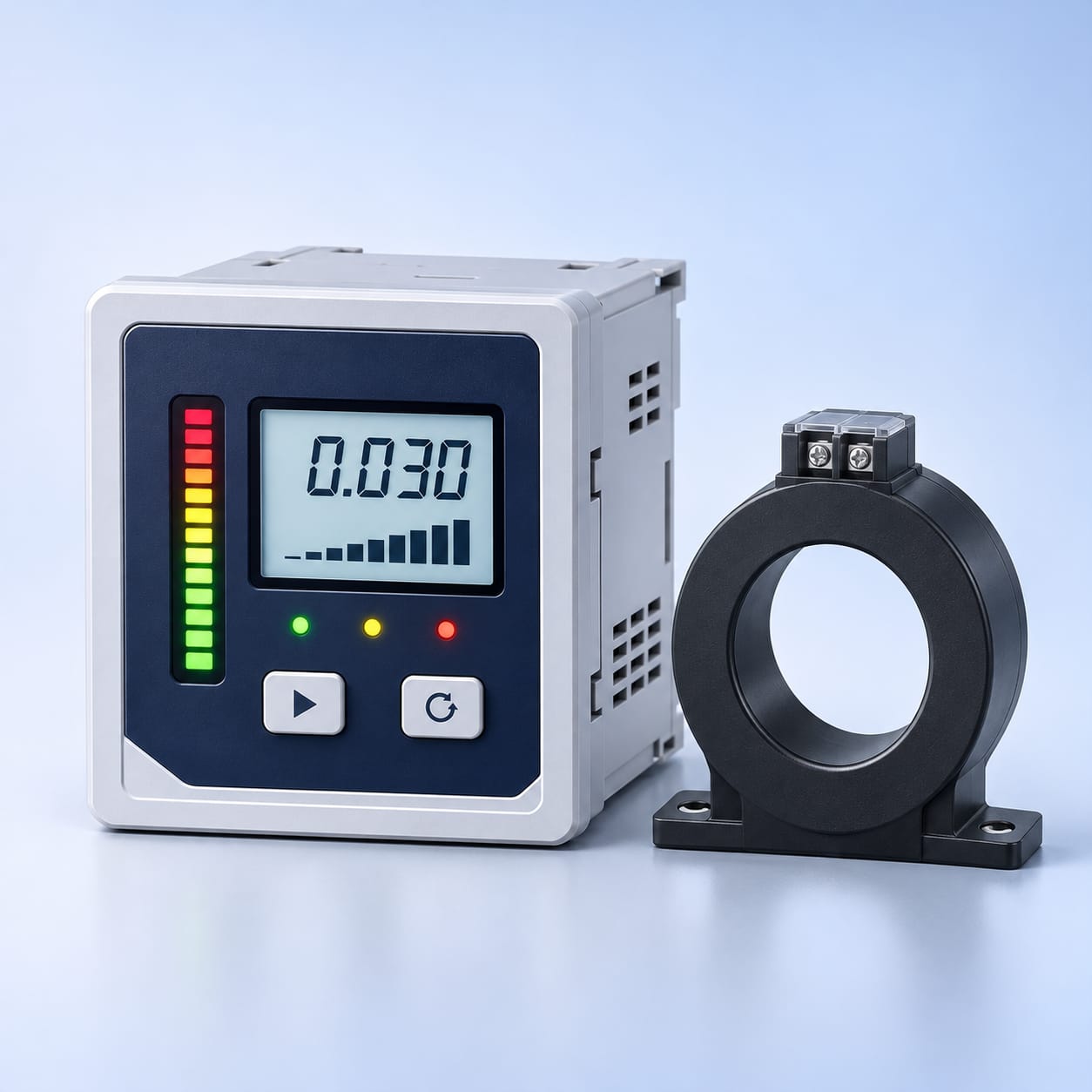
An earth leakage relay (ELR) detects current that leaks from a circuit to earth — for example through damaged insulation or a person touching a live part — and trips the breaker before it becomes dangerous.
Unlike an RCCB, an ELR works with a separate core-balance current transformer and circuit breaker. That means it can protect large feeders, and you can adjust both sensitivity and time delay.
Which sensitivity should I choose?
Sensitivity depends on what you are protecting:
- 30 mA — protection of people (wet areas, sockets, construction sites)
- 100–300 mA — fire protection for circuits and distribution boards
- 1 A and above — equipment and feeder protection, coordinated with downstream devices
Where is it used in Malaysia?
Earth leakage protection is common in main and sub-switchboards for commercial buildings, hospitals, factories and infrastructure, and is often specified by M&E consultants together with earth fault and overcurrent protection.
Frequently asked questions
No. Earth leakage relays detect small leakage currents (from 30 mA) for people and fire protection. Earth fault relays detect larger fault currents (amps) to protect equipment and cables.
The X10 Earth Leakage Relay and the Mikrosafe Earth Leakage System, which ships the relay with a matched core-balance CT.